AnonVault: The Encryption Tool That Guards Every File You Own
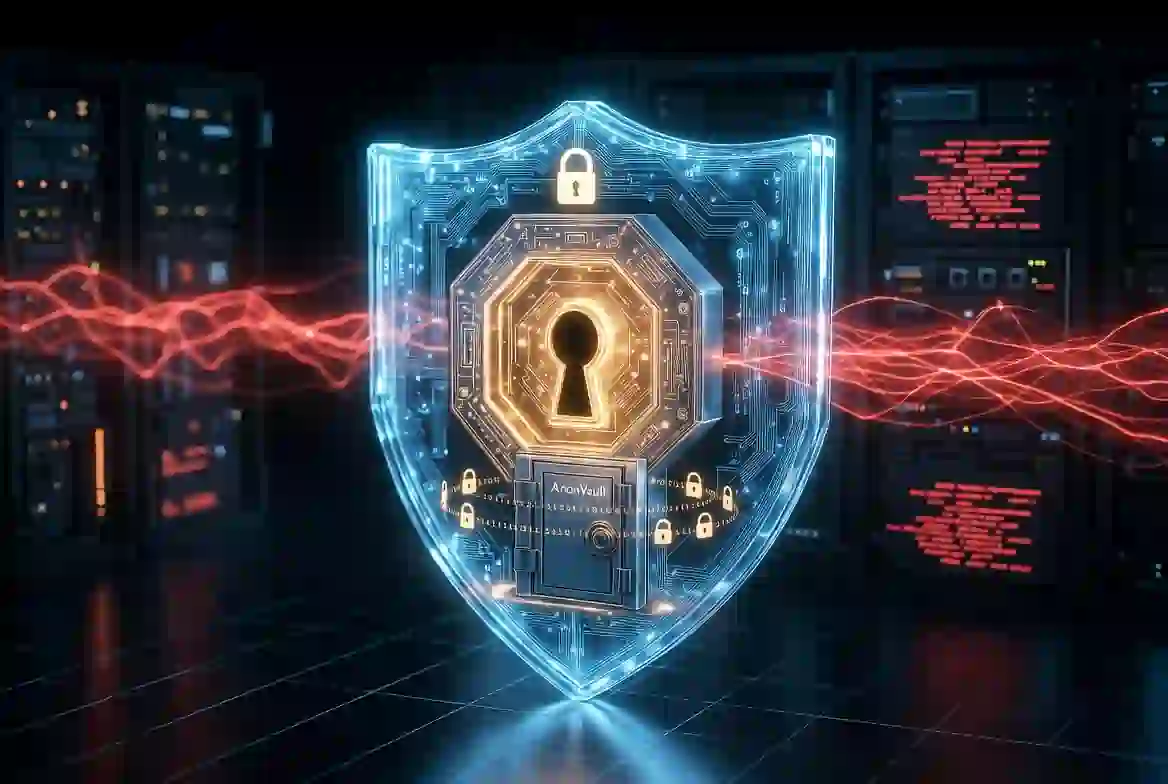
Your files sit unprotected on a hard drive right now. One breach, one stolen laptop, one phishing click strips away every layer of privacy you assume exists. Hackers stole 22 billion records in 2025 alone. AnonVault locks your documents, photos, and credentials inside a zero-knowledge vault where only your decryption key opens the door. No backdoors. No prying eyes. You need this barrier before the next attack finds your unprotected data.
What Makes AnonVault Different From Basic Cloud Storage
Dropbox and Google Drive store your files. They do not hide them. Those platforms hold encryption keys on their servers. Employees can access your data. Court orders can compel disclosure. AnonVault operates on a zero-knowledge architecture. The company never sees your master password, encryption keys, or file contents. Your vault decrypts locally on your device before anything reaches the screen. Hackers breaching AnonVault servers find only unreadable ciphertext.
Core distinction: Standard cloud services protect files in transit. AnonVault protects files at rest, in transit, and from the provider itself.
The cryptographic engine uses AES-256-GCM with Argon2id key derivation. This combination resists brute-force attacks even with specialized hardware clusters. Each file receives a unique encryption key wrapped by your master key. Compromising one file reveals nothing about the others.
Full Feature Breakdown of AnonVault
Zero-Knowledge Vault Architecture
Your password unlocks the vault locally. The server authenticates you without ever receiving the plaintext password. A cryptographic proof verifies your identity client-side. AnonVault stores only a salted hash. Even senior engineers cannot reset your access. Lose your master password, and recovery becomes impossible—a deliberate security trade-off.
Encrypted File Sharing
Send protected files to anyone via time-limited links. Recipients download the encrypted package and unlock it with a passphrase you share through a separate channel. Set expiration timers from one hour to thirty days. Revoke access instantly from your dashboard. Track when files get accessed and by which device fingerprint.
Cross-Platform Sync Engine
Windows, macOS, iOS, Android, and Linux all run native clients. Files sync automatically across devices while maintaining encryption at every stage. The sync engine detects changes at the block level and uploads only modified portions. A 5GB video file edited slightly triggers a 15MB upload, not a full re-upload.
Private Photo Storage with On-Device AI
Photos upload in original quality with encryption applied before transmission. AnonVault runs face detection and object recognition entirely on your phone’s neural engine. No images leave the device unencrypted for AI processing. Search for “beach” or “passport” and get results without servers ever seeing your gallery.
Emergency Access Protocol
Designate trusted contacts who can request vault access. The system waits a preset delay period—say, seven days—and notifies you repeatedly. If you do not deny the request, access transfers to your contact. This protects families during incapacitation without creating a permanent backdoor.
Hardware Security Key Support
Bind vault decryption to physical YubiKeys or Titan security keys. Even with your master password, an attacker cannot decrypt files without the USB key present. This stops remote attacks completely. Phishing sites capturing your password get useless data without the hardware token.
| Feature | AnonVault | Google Drive | Dropbox | Proton Drive |
| Zero-Knowledge Encryption | Yes, default | No | No | Yes, default |
| Client-Side AI Processing | Yes | No | No | No |
| Hardware Key Binding | Yes | Limited | Limited | No |
| Emergency Access Protocol | Yes | Inactive Account Manager | No | No |
| Block-Level Sync | Yes | Partial | Yes | No |
| Open-Source Client | Yes | No | No | Partially |
| Free Storage Tier | 5GB | 15GB | 2GB | 1GB |
AnonVault Pricing Plans Breakdown
Free Guardian Plan (5GB): Core encryption, two-device sync, basic sharing links. Good for testing the interface and protecting a small set of critical documents.
Shield Plan ($4.99/month): 500GB storage, unlimited devices, priority sync speeds, email support, 30-day file version history. Fits individual professionals securing client files and personal records.
Fortress Plan ($12.99/month): 2TB storage, hardware key support, emergency access, 180-day version history, phone support. Built for families and small teams handling sensitive financial or legal data.
Citadel Business ($24.99/user/month): 5TB per user, admin console, forced two-factor authentication, audit logs, SSO integration, dedicated account manager. Enterprises protecting intellectual property and regulated data choose this tier.
Discounts apply for annual billing—save roughly 17% across all paid plans.
How to Set Up AnonVault in Under 10 Minutes
- Download the client from anonvault.com or your device’s official app store.
- Create an account using an email and a strong master password. The setup wizard scores password strength in real-time.
- Save the recovery kit PDF. Print two copies. Store one in a fireproof safe and one with a trusted person.
- Choose folders for automatic sync. Start with Documents, Photos, and any folder containing tax records or identity scans.
- Enable biometric unlock on mobile devices. Face ID and fingerprint sensors add convenience without weakening encryption.
- Register a hardware security key if you own one. Skip this for now and add it later under Security Settings.
The interface uses a familiar file-tree layout. Right-click any file to share, rename, or check its encryption status. A green shield icon confirms the file sits encrypted on disk.
AnonVault Security Infrastructure Deep Dive
Encryption runs on the client side exclusively. The open-source client code passes independent security audits by Cure53 and Trail of Bits annually. Audit reports appear publicly on the AnonVault transparency page. Server infrastructure sits in Swiss data centers operated under strict privacy laws. Switzerland remains outside the Five Eyes intelligence alliance.
Data redundancy uses erasure coding across three geographically separate locations. A natural disaster destroying one facility does not cause data loss. Network traffic routes through TLS 1.3 with perfect forward secrecy. Certificate pinning prevents man-in-the-middle attacks on compromised certificate authorities.
The bug bounty program pays up to $50,000 for critical vulnerability reports through HackerOne. Over 200 resolved reports demonstrate active security maintenance rather than security theater.
Who Needs AnonVault Most
Journalists protecting source identities and unpublished investigations. Lawyers securing privileged client communications and case files. Healthcare professionals storing patient records compliant with HIPAA encryption requirements. Whistleblowers preparing submissions to oversight bodies without employer discovery. Divorce attorneys keeping sensitive financial disclosures under tight control. Cryptocurrency holders safeguarding seed phrases and wallet backups. Remote workers defending company intellectual property on personal devices. Parents storing children’s identification documents, medical records, and family photos away from data brokers.
AnonVault Versus Competitors: Honest Comparison
Proton Drive matches AnonVault on zero-knowledge encryption but lacks client-side AI photo search, hardware key binding, and emergency access. Proton Drive integrates better with Proton Mail ecosystem.
Tresorit charges significantly more—$15.29/month for 1TB versus AnonVault Fortress at $12.99/month for 2TB. Tresorit targets enterprise compliance and includes e-signature features absent from AnonVault.
Filen offers cheaper lifetime plans and full open-source stack but lacks the security audit pedigree and enterprise admin features. Smaller team means slower feature development.
Sync.com provides zero-knowledge at low prices with 5GB free but lacks Linux support, hardware key binding, and on-device AI processing.
AnonVault wins for users wanting maximum security without enterprise complexity. Tresorit or Proton Drive suit buyers needing email suite integration.
Common Mistakes That Weaken AnonVault Protection
- Saving the master password in a browser password manager. Browser vaults unlock with a single OS-level authentication. Store passwords in a dedicated encrypted password manager like Bitwarden instead.
- Skipping the recovery kit print. Phone photos of the recovery code sync to cloud services unprotected. Print physical copies and store them securely.
- Using a weak master password. Four random words totaling 20+ characters resist dictionary attacks. “PurpleTigerBank123” cracks in seconds.
- Ignoring two-factor authentication. Turn on hardware key 2FA or TOTP right away. SMS codes invite SIM-swap attacks.
- Sharing encrypted files and sending the passphrase through the same channel. Email the file, text the password. Compromise of one channel preserves security.
AnonVault Mobile Apps: Real-World Testing
iOS and Android apps mirror desktop functionality cleanly. The camera upload feature grabs every photo immediately after capture and encrypts it before anything touches iCloud or Google Photos backup. A battery impact test over two weeks showed 3% additional drain with background sync active—negligible for most users.
Offline access works by caching selected vault folders locally. Mark tax documents for offline viewing before meeting your accountant. The files remain encrypted on the phone until you authenticate. Biometric unlock speeds up access dramatically versus typing long passwords repeatedly.
File import from other apps respects privacy. Share a document to AnonVault from any app, and encryption wraps it before the file writes to device storage.
Recovering Access When You Forget the Master Password
AnonVault cannot reset your password. That statement scares people. It also guarantees no employee, hacker, or government can bypass your encryption. The recovery kit PDF contains a 24-word recovery phrase. Enter this phrase on any device to set a new master password and regain vault access. Guard this phrase like physical gold. Consider stamping the words into a metal plate that survives fire and flood. Split the phrase across two locations if you distrust any single storage spot. M-of-n secret sharing provides even stronger protection for the extremely cautious.
AnonVault for Business and Compliance Requirements
SOC 2 Type II certified. GDPR compliant with data processing agreements available for download. HIPAA covered entities sign business associate agreements for the Citadel Business plan. Audit logs track every file access, share creation, and permission change. Export logs for compliance reporting. Administrators enforce device approval policies and geographic access restrictions. Fired employee? Revoke vault access instantly regardless of what files they stored locally—the encrypted copies become useless without server authentication.
Frequently Asked Questions
How does AnonVault protect data when servers get breached?
Your files sit on AnonVault servers as AES-256 encrypted ciphertext. The encryption keys never leave your device. Breached servers expose scrambled data meaningless without your personal decryption key stored only on devices you control.
Can law enforcement force AnonVault to unlock my files?
AnonVault holds no decryption keys to surrender. A court order compels the company to provide account metadata and stored encrypted files. Those files remain unreadable without your password or recovery phrase. Swiss law requires user notification of government requests unless a judge orders a gag period.
What happens to shared files after I revoke access?
Revoking a share link immediately stops server-side access. Files already downloaded to the recipient’s device remain accessible if they possess the passphrase. Use the passphrase rotation feature to re-encrypt files with a new key after sharing incidents.
Does AnonVault scan my files for illegal content?
No server-side scanning occurs. Zero-knowledge architecture makes content scanning technically impossible. AnonVault terms of service prohibit illegal activity, and reported public share links face investigation, but private vault scanning does not exist.
How does AnonVault handle device theft?
Remote device deauthorization removes the stolen device from your sync list. The local encrypted cache stays locked. Enable biometric protection and auto-lock timers to delay access attempts. Track the last IP address and location from the device through your account dashboard.
Can I export all my data easily if I want to leave?
Export tools download all vault contents as standard unencrypted files to your device. The process runs client-side with a progress indicator. Large vaults may require leaving the app open for hours. No vendor lock-in exists through proprietary formats.
Expert Sources on Encryption Standards
- National Institute of Standards and Technology (NIST) maintains AES encryption standards documentation at nist.gov
- Electronic Frontier Foundation provides surveillance self-defense guides at eff.org
- Cure53 publishes security audit transparency reports at cure53.de
Your files hold your medical history, financial accounts, family memories, and private thoughts. Companies mine this data for profit. Hackers ransom it for cryptocurrency. Governments collect it for surveillance programs. AnonVault restores the fundamental principle that your data belongs to you alone. Download the free Guardian plan today. Test the encryption with files you want protected. Upgrade only when you trust the system with everything you cannot afford to lose. Start locking your digital life now—the clock ticks on when, not if, someone tries to take it.