When Ubisoft quietly opened the doors to the R6 Marketplace, a lot of long-time Rainbow Six Siege players felt the same mix of curiosity and caution. Trading cosmetics had always been something people talked about in Discord servers or forums, usually followed by warnings about scams. Suddenly, there was an official place to do it. No sketchy middlemen, no awkward trust trades. Just a system built into the Siege ecosystem itself. I remember logging in the first time and thinking, “Alright, this could actually change how I treat my inventory.”
This guide isn’t written from a marketing angle. It’s written from real use, small mistakes, a few good trades, and some lessons learned the slow way.
What the Marketplace Actually Is (And What It Isn’t)
At its core, the marketplace is a controlled trading environment for cosmetic items in Rainbow Six Siege. Skins, charms, uniforms, and similar items can be exchanged between players using credits. That’s the simple version.
What it isn’t is a free-for-all economy. You can’t trade everything. You can’t message buyers directly. You can’t cash out to real money. Ubisoft clearly drew boundaries, and honestly, that’s probably why the system works as smoothly as it does.
When I first browsed through listings, I noticed how clean everything felt. Items were sorted clearly. Prices were visible. No pressure. You list something, or you don’t. You buy something, or you walk away. That calmness is rare in gaming economies.
Why Players Actually Use It
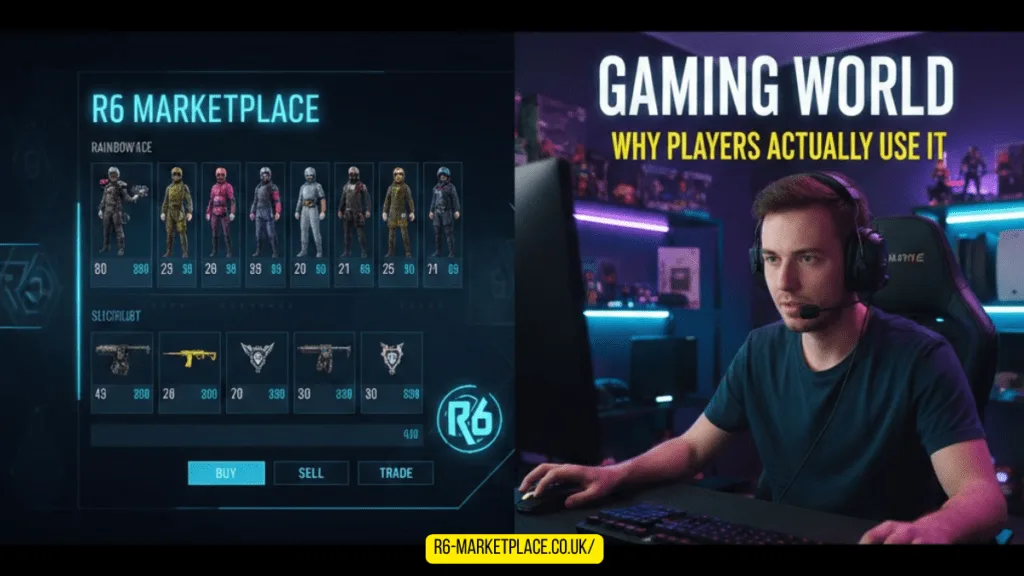
Turning Forgotten Items Into Value
Most Siege players have cluttered inventories. Old seasonal skins, event charms you forgot about, uniforms you’ll never equip again. Before, those items just sat there. Now, some of them suddenly have value.
I sold a weapon skin I hadn’t used in years. Nothing rare, nothing flashy. But the credits I earned went straight into a newer bundle I actually wanted. That alone made the system feel worthwhile.
Access to Older Cosmetics
Not everyone has been playing since Year 1. Newer players often missed out on early events or limited drops. The marketplace gives them a second chance without breaking rules or risking bans.
I’ve seen people finally grab items they used to watch on YouTube videos years ago. That kind of quiet satisfaction is hard to fake.
How Buying Items Feels in Practice
Buying is straightforward, but there’s a mindset to doing it well.
You search an item, see current listings, and decide if the price feels right. Some days, prices feel inflated. Other days, you’ll stumble on a surprisingly reasonable offer.
I learned quickly not to rush. If you want something badly, you’ll overpay. If you wait a bit, prices often settle. There’s a rhythm to the market, especially around updates or events.
Patience saves credits. Every time.
Selling Without Regret
Selling sounds easier than it feels. The moment you list an item, you start questioning yourself.
“Was that skin actually rare?”
“Should I have waited?”
“What if prices go up next season?”
Those thoughts never fully go away. My advice is simple: sell what you genuinely don’t use. Not what you might use someday.
Once I sold an event charm I thought I didn’t care about. A week later, I kind of missed it. That wasn’t a system problem. That was me not being honest with myself.
Understanding Price Movement (Without Overthinking It)
You don’t need spreadsheets or trackers to use this system well. Prices move based on visibility, nostalgia, and timing.
- Items spike when creators talk about them
- Prices dip after big sales or events
- Old cosmetics gain interest when new players join
That’s it. Nothing mystical.
If something feels overpriced, it probably is. If something feels oddly cheap, check twice. Sometimes you’re just early.
Where the Marketplace Fits Into Siege Culture
This system didn’t replace grinding or pack openings. It complemented them.
Some players still love the randomness of packs. Others prefer direct choice. Neither approach is wrong. What changed is control. You’re no longer locked into pure luck.
The R6 Marketplace also reduced shady third-party trading conversations. That alone makes the community healthier. Fewer scams mean fewer angry posts and fewer lost accounts.
That’s a win most people don’t talk about enough.
Things New Users Should Know Early
Not Everything Is Tradable
This catches people off guard. Certain exclusives, promotional items, or newer cosmetics may not appear. That’s intentional.
Instead of getting annoyed, treat the marketplace as a bonus, not a replacement for everything else.
Credits Stay in the Ecosystem
You’re not converting items into real money. You’re recycling value within the game. That mindset prevents disappointment later.
Once you accept that, the system makes much more sense.
Small Mistakes I See People Make
- Buying impulsively late at night
- Selling items during hype spikes without checking trends
- Assuming “old” always means “valuable”
We’ve all done at least one of these. It’s fine. You learn quickly.
The biggest mistake, though, is overusing the system. Constant flipping drains the fun. Treat it like a tool, not a job.
How It Changes Long-Term Play
Over time, you start caring more about what you unlock. Items feel less disposable. You think twice before ignoring a seasonal drop.
I noticed myself paying more attention during events. Not because I wanted profit, but because choices suddenly mattered.
That’s a subtle but meaningful shift in how Siege feels.
Trust and Safety
Because everything happens inside Ubisoft’s system, the risk level stays low. No trading passwords. No external payments. No social engineering.
Is it perfect? No system is. But compared to the old days of “DM me proof,” it’s a massive improvement.
That sense of safety makes participation feel optional rather than risky.
The Marketplace as a Long-Term Feature
This doesn’t feel like a temporary experiment. It feels like infrastructure.
Ubisoft clearly designed it to evolve slowly. That’s probably for the best. Fast changes would destabilize prices and trust.
If you approach the R6 Marketplace casually, it rewards you. If you try to game it aggressively, it pushes back. Balance matters here.
FAQs
1. Can beginners use the marketplace without experience?
Yes. If you can navigate menus and understand prices, you’ll be fine. There’s no advanced knowledge required.
2. Do prices change often?
They fluctuate, but not wildly. Major changes usually follow events, updates, or sudden popularity spikes.
3. Is it better to sell early or wait?
It depends on the item. If you don’t use it, selling earlier often prevents regret.
4. Can I rebuy something I sold later?
Sometimes. But there’s no guarantee the price will stay the same.
5. Does trading affect gameplay balance?
No. Everything is cosmetic. Matches play the same regardless of what you buy or sell.
Conclusion
The R6 Marketplace doesn’t turn Siege into an economy simulator, and that’s a good thing. It gives players options without pressure, value without risk, and flexibility without chaos. Used thoughtfully, it becomes one of those quiet features you didn’t know you wanted until it existed.