Piercing Bump vs Keloid: Spot the Difference Fast
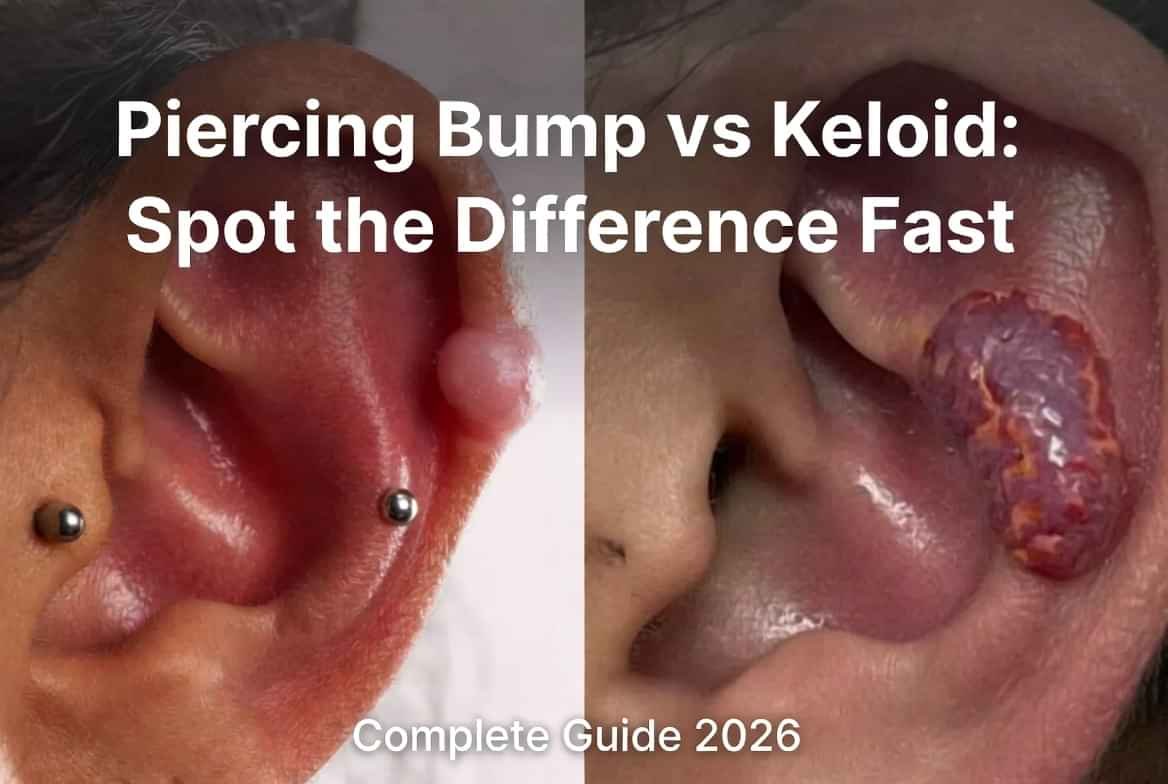
Finding a strange lump near your fresh piercing can trigger instant worry. You might wonder if it is a normal healing reaction or something far more serious. Understanding the piercing bump vs keloid distinction is your first step toward proper care. One often vanishes with simple cleaning; the other demands medical attention. This guide provides a clear, expert-backed roadmap to identify and treat each condition effectively.
Understanding the Piercing Bump (Hypertrophic Scar)
A piercing bump, medically termed a hypertrophic scar, is a common response to skin trauma. It represents your body’s natural attempt to repair the puncture wound .
What Does a Piercing Bump Look Like?
- Appearance: Small, flesh-colored, pink, or slightly reddish lump .
- Texture: Soft to the touch and may feel slightly raised.
- Location: Stays strictly confined to the piercing hole itself .
- Symptoms: May feel tender, itchy, or uncomfortable.
Why Do Piercing Bumps Form?
Piercing bumps develop when the healing process faces irritation. Common triggers include:
- Physical Trauma: Accidentally snagging the jewelry or sleeping on it.
- Jewelry Material: Reactions to low-quality metals like nickel .
- Aftercare Issues: Over-cleaning with harsh solutions or neglecting basic hygiene.
Understanding the Keloid: An Overgrowth of Scar Tissue
A keloid is far more than a simple bump. It represents an overproduction of collagen during wound healing, resulting in a growth that extends beyond the original wound .
What Does a Keloid Look Like?
- Appearance: Thick, raised, and often shiny scar tissue .
- Color: Varies from pink and red to dark brown or purple, depending on skin tone .
- Texture: Firm and rubbery.
- Growth: Can continue to grow slowly over months or even years .
Key Differences: Piercing Bump vs Keloid
To make the right treatment choice, you need to know exactly what you are dealing with. The piercing bump vs keloid distinction is best understood through a clear comparison.
| Feature | Piercing Bump (Hypertrophic Scar) | Keloid |
| Definition | Temporary, localized scar tissue. | Permanent, overgrown scar tissue. |
| Growth | Stays confined to the piercing site . | Spreads beyond the original wound. |
| Timing | Appears within weeks of the piercing . | Develops 3 to 12 months after injury. |
| Texture | Soft and sometimes slightly tender. | Firm, rubbery, and dense. |
| Treatment | Resolves with improved aftercare. | Requires medical intervention. |
How to Tell the Difference: A Practical Guide
1. Timing of Appearance
A piercing bump typically appears soon after the piercing—often within weeks. A keloid, however, takes time to develop, sometimes appearing months after the initial event .
2. Size and Spread
The spread of the bump is a critical factor. If the bump never grows beyond the jewelry and seems to shrink, it is a piercing bump. A keloid will expand beyond the piercing hole and may continue to grow, becoming much larger than the original wound .
3. Symptoms and Feelings
A piercing bump vs keloid diagnosis also depends on feeling. Piercing bumps are often tender or itchy. Keloids can be intensely itchy, painful, or cause a burning sensation. Sometimes, they are painless but simply grow persistently .
What Causes Each Condition?
Understanding the root causes helps in both treatment and prevention.
Causes of Piercing Bumps
- Irritation: The leading cause. It includes friction from clothing, sleeping on the piercing, or playing with the jewelry .
- Aftercare Mistakes: Using rubbing alcohol or hydrogen peroxide, which can dry out and irritate the wound .
- Allergic Reaction: Sensitivity to certain metals, like nickel, used in jewelry.
Causes of Keloids
- Genetics: A family history of keloids significantly increases your risk .
- Skin Type: People with darker skin tones are more prone to keloid formation .
- Trauma: Any wound, including a piercing, can trigger keloid growth in susceptible individuals.
Treatment Options for Piercing Bumps
Good news: Most piercing bumps are easy to manage at home. Consistency is key to seeing results.
1. Standard Piercing Aftercare
- Saline Solution: Clean the piercing with sterile saline solution 1-2 times daily .
- Pat Dry: Use a clean paper towel to dry the area; do not use a cloth towel that can harbor bacteria .
- Leave It Alone: Avoid twisting or touching the jewelry unnecessarily.
2. Use High-Quality Jewelry
If you suspect a metal allergy, switch to implant-grade titanium or 14k gold. These materials are less likely to cause irritation.
3. Advanced Care
- Silicone Gel: Applying a silicone gel or patch can help flatten the raised tissue .
- Warm Compress: A warm compress can soothe irritation and promote drainage if a minor infection is suspected.
Treatment Options for Keloids
Keloids rarely go away on their own. Medical treatment is essential to manage them effectively.
1. Corticosteroid Injections
This is a common first-line treatment. Steroids are injected directly into the keloid to reduce inflammation and shrink the scar. A series of injections is usually required .
2. Laser Therapy
Pulsed-dye lasers can help flatten the keloid and reduce redness. This is often combined with other treatments for best results .
3. Surgical Removal
While surgery can remove a large keloid, recurrence rates are very high—about 20% or more . For this reason, surgery is usually followed by radiation or steroid injections to prevent regrowth .
4. Pressure Therapy
After surgery, wearing pressure earrings for 16 hours a day can help prevent the keloid from returning. This treatment can be uncomfortable and is needed for up to a year .
5. Cryotherapy
This involves freezing the keloid with liquid nitrogen. It can soften the scar and reduce its size, often used alongside steroid injections .
Prevention: Stop Problems Before They Start
Prevention is always better than cure, especially regarding keloids.
For Everyone
- Choose Your Piercer Wisely: Ensure they use sterile equipment and high-quality jewelry.
- Follow Aftercare: Adhere strictly to the aftercare instructions provided.
- Avoid Trauma: Do not sleep on a new piercing or change the jewelry too soon.
If You Are Prone to Keloids
- Avoid Piercings: If you have a history of keloids, it is best to avoid piercings, particularly in cartilage .
- Consult a Dermatologist: If you must get a piercing, discuss preventive strategies with a dermatologist first.
- Act Fast: If you notice the skin thickening around a piercing, remove the jewelry and seek professional advice immediately .
When to See a Doctor
- The bump continues to grow after six weeks.
- The bump becomes painful, produces pus, or has a foul odor .
- The skin around the bump becomes very red or darkens significantly.
- You suspect a keloid, even if it is small—early treatment yields the best results .
Frequently Asked Questions (FAQs)
Q1: Can a piercing bump turn into a keloid?
A piercing bump itself does not transform into a keloid. However, if you have a genetic predisposition to keloids, the trauma of the piercing can cause a keloid to form over time, which might look like a growing bump .
Q2: How long does it take for a piercing bump to go away?
A piercing bump will typically reduce in size each week. It often becomes unnoticeable or disappears completely within six weeks . A keloid, however, is permanent and will not fade without treatment.
Q3: What does an infected piercing bump look like?
An infected bump is often accompanied by severe redness, swelling that worsens, and a discharge of yellow or green pus . It may also feel hot to the touch . If you notice these signs, consult a doctor promptly.
Q4: Does removing the jewelry help get rid of a keloid?
Removing the jewelry will not make an existing keloid disappear. In some cases, removing jewelry too early can trap an infection. If you suspect a keloid, seek professional medical advice before removing the jewelry .
Q5: Are there effective home remedies for keloids?
Home remedies like onion extract or garlic extract are not clinically proven to remove keloids. The most effective non-prescription option is silicone gel, which can help manage smaller keloids .
Conclusion
The piercing bump vs keloid debate comes down to a simple rule: timing and growth. A piercing bump is a small, temporary scar confined to the piercing site that typically fades with proper care. A keloid is a permanent, expanding scar that requires professional dermatological treatment. By paying attention to the symptoms and acting quickly, you can preserve your piercing’s look and your skin’s health. For any doubt, trust your instincts and your dermatologist’s expertise.