How to Master Chess Pieces: The Ultimate Strategy Guide
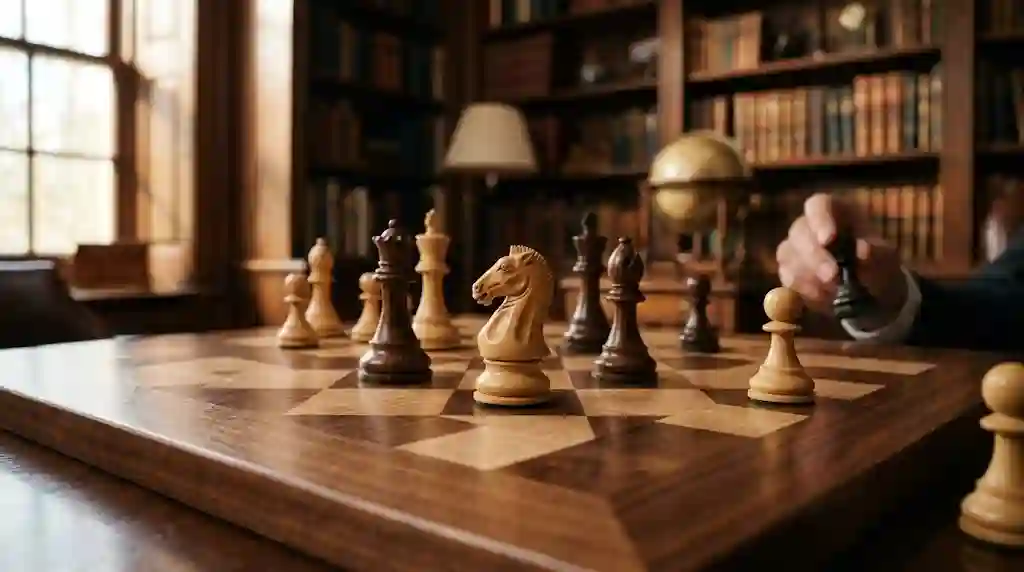
You sit across the board, staring at your opponent’s opening move. Your hand hovers over your knight, but doubt freezes your fingers. Making a single mistake with your chess pieces in the early turns can destroy your position before the battle really begins.
Winning does not require calculating twenty moves ahead like a supercomputer. You only need to understand the true strengths of your army, control the center, and spot simple tactical patterns.
Whether you play chess online or over a wooden board, this complete guide will help you understand every piece, master the right chess setup, and win more games consistently.
Complete Chess Board Setup and Piece Value
Setting up your army correctly sets the foundation for a great chess game. A simple mistake during the chess board setup can throw off your entire strategy from move one.
Always align the board so that a light-colored square rests on the bottom-right corner for both players. Place your pawns along the second rank to form your protective wall.
Line up your major chess pieces behind your pawns on the first rank. Place rooks in the corners, knights next to them, and bishops flanking the royal couple. Remember the golden rule: the white queen starts on a light square, and the dark queen starts on a dark square.
| Chess Pieces | Quantity | Value in Points | Starting Squares | Main Tactical Role |
| Pawn | 8 | 1 | A2–H2 / A7–H7 | Board control, structure, promotion |
| Knight | 2 | 3 | B1, G1 / B8, G8 | Jumping over pieces, center forks |
| Bishop | 2 | 3 | C1, F1 / C8, F8 | Long-range diagonal pressure |
| Rook | 2 | 5 | A1, H1 / A8, H8 | Controlling open files and back ranks |
| Queen | 1 | 9 | D1 / D8 | Ultimate offensive and defensive weapon |
| King | 1 | Invaluable | E1 / E8 | Target of the game; must be protected |
Understanding these piece values prevents you from giving away strong attackers for weak defenders. For instance, trading a bishop for a rook almost always gives you a material advantage that pays off later.
How to Play Chess: Movement Rules and Special Tactics
Learning how to play chess for beginners starts with understanding how individual forces move across the board. Every piece brings a distinct movement pattern to the battle.
Pawns march forward one square at a time, but they can leap two squares on their very first move. They capture diagonally, creating tension across adjacent files.
Knights move in an unusual L-shape pattern and remain the only soldiers capable of jumping over others. Bishops sweep across open diagonals, while rooks glide along straight horizontal ranks and vertical files.
Your queen combines the powers of the rook and bishop, making her the most dangerous unit on the board. The king steps only one square in any direction, requiring constant defense against enemy threats.
To protect your leader, learn how to castle in chess. What is castling in chess? It is a special double-move that tucks your king safely into a corner while activating your rook for battle.
You must also watch out for draws. What is a stalemate in chess? A stalemate occurs when a player has no legal moves left and their king is not in check, ending the match in an instant tie.
Best Chess Openings for Beginners and Quick Attacks
The opening phase determines who controls the pace of the entire match. If you waste early moves pushing random edge pawns, an aggressive opponent will quickly tear through your defenses.
The best chess openings for beginners always fight for control of the four central squares. Start by advancing your king or queen pawn forward two spaces to stake your claim.
Develop your knights and bishops toward active squares before moving the same piece twice. Keep your queen safe until your minor pieces are active and your king has castled safely.
If you enjoy sharp attacks, study how to win chess in 4 moves using the Scholar’s Mate. This quick trap targets the weak f7 pawn using your queen and bishop in tandem.
While this trick works against absolute beginners, experienced players on platforms like chess com will spot it easily and punish your early queen moves.
Who Invented Chess? Origins, History, and Trivia
Curious players often ask: when was chess invented, and who invented chess? The earliest version of the game, known as Chaturanga, originated in India during the sixth century AD.
Where was chess invented? From ancient India, it spread into Persia and later transformed across medieval Europe into the modern rules we play today.
People often ask: is chess a sport? Yes, international sports bodies recognize it as an official sport because top-level matches require intense mental endurance, elevated heart rates, and physical stamina.
You might even see references to the famous 1980s musical Chess Broadway, which brought the intense drama of world championships to the musical theater stage.
Do not confuse this ancient tactical game with chess pie! What is chess pie? It is a rich, custard-filled Southern dessert made from sugar, butter, and eggs that shares only a name with the board game.
Practical Chess Strategies for Beginners to Win More Matches
Knowing how to win in chess requires more than basic rule memorization. You need solid tactical habits to outplay your opponent step by step.
Look for tactics like forks, pins, and skewers every single turn. A knight fork hits two high-value targets simultaneously, forcing your opponent to lose valuable material.
Always ask yourself what your opponent wants before you touch a piece. Spotting their threats early prevents blunders and keeps your pieces working together harmoniously.
Take advantage of free chess platforms online to sharpen your tactical vision. Solving daily puzzle trainers is the fastest way to recognize winning patterns in real games.
Step-by-Step Guide to Teaching Children Chess
Teaching youngsters requires a patient, hands-on approach. When exploring how to teach kids chess, start with simple “pawn wars” on an empty board rather than full 32-piece setups.
Add the knights and rooks slowly as they master basic captures and movement rules. This step-by-step approach keeps them excited without feeling overwhelmed by complex rules.
Using dedicated platforms like chess kids keeps young minds hooked with fun puzzles and animated lessons that turn tactical learning into play.
Online Chess and Self-Moving Boards
Technology has completely transformed how we experience the game today. You can play chess online against millions of active players worldwide at any hour of the day.
Students and office workers frequently look for chess unblocked platforms to play quick tactical matches during breaks on restricted networks.
For players who miss physical boards during online battles, a self moving chess board uses internal motors and magnets to move physical pieces across the board in real-time.
Frequently Asked Questions
How many squares on a chess board?
A standard board features 64 alternating light and dark squares arranged in an eight-by-eight grid.
Who is the world’s greatest chess player?
Magnus Carlsen from Norway is widely recognized as the best active player in the world, holding the highest rating in modern history.
Who is the most famous chess player?
Garry Kasparov and Bobby Fischer share the title of the most famous chess players due to their legendary World Championship matches and historical impact.
How can you improve your chess skills fast?
Focus on solid opening principles, solve 15 minutes of tactical puzzles every day, and analyze your losses to spot recurring mistakes.
Final Thoughts: Master Your Next Game
Mastering your chess pieces comes down to regular practice, patience, and clear tactical awareness. Control the center, keep your king safe, and coordinate your attacks carefully.
Set up your board, challenge an opponent online, and apply these strategies to claim your next victory.