Astronaut Helmet: Complete Guide, Features, Types, and Safety Insights
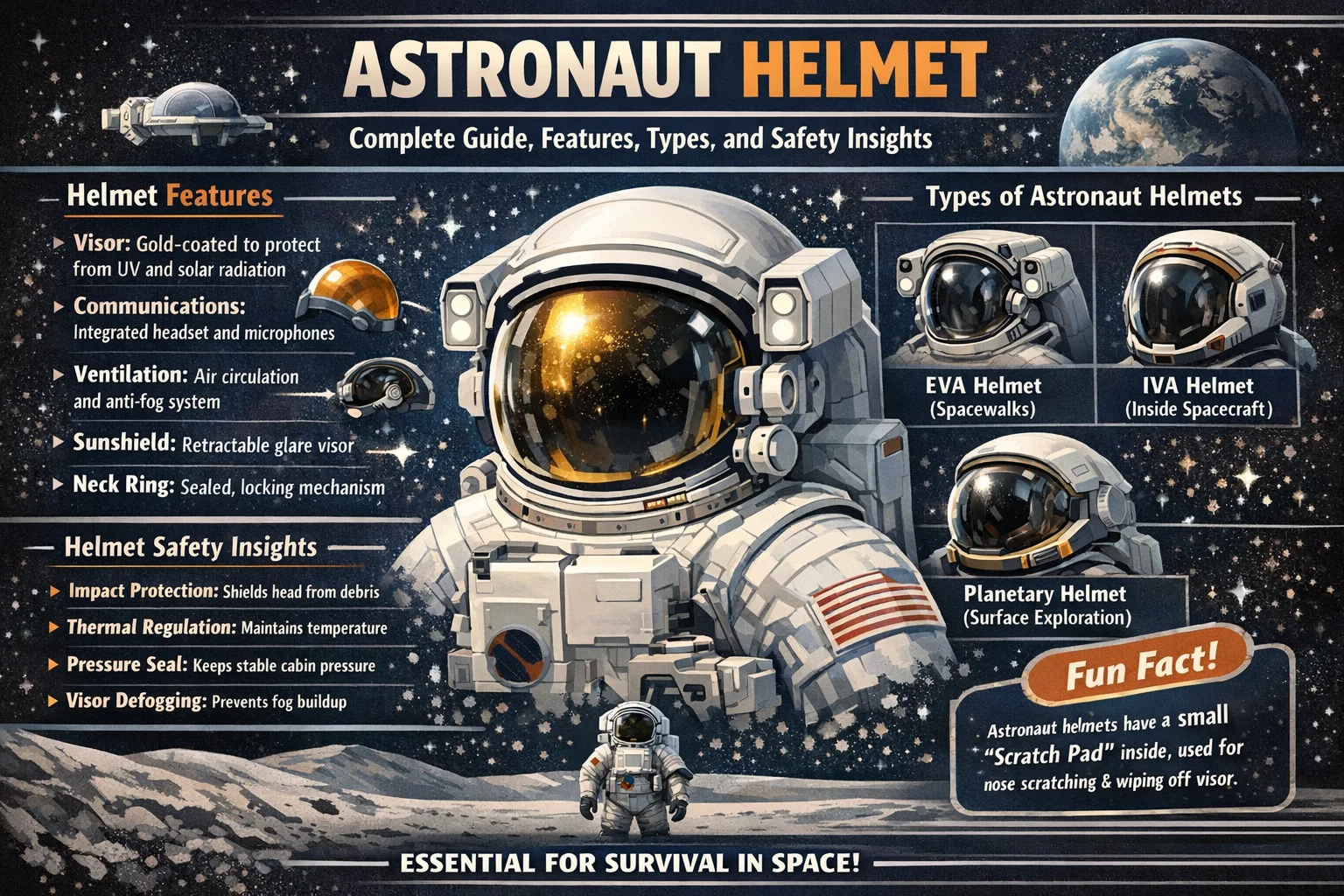
An astronaut helmet is more than just a piece of gear—it’s a lifeline for anyone venturing beyond Earth’s atmosphere. From shielding astronauts from the vacuum of space to providing vital oxygen and communication, helmets are a marvel of engineering. They represent a perfect blend of science, safety, and comfort, ensuring that astronauts can perform complex tasks millions of miles from home.
While the term might conjure images of shiny, bubble-like headgear floating in zero gravity, the technology behind each astronaut helmet is precise, tested, and constantly evolving. Understanding these helmets not only gives insight into space exploration but also demonstrates the incredible attention to detail that goes into keeping humans alive in extreme environments.
The Purpose of an Astronaut Helmet
At its core, an astronaut helmet serves multiple critical functions. It provides a sealed environment, protecting the astronaut from the vacuum of space and extreme temperature fluctuations. Without it, exposure could be fatal within seconds. The helmet also maintains breathable air pressure and supplies oxygen through integrated life-support systems, making survival possible during extravehicular activities (EVAs).
Besides life support, helmets serve as communication hubs. Built-in microphones and speakers allow astronauts to stay connected with mission control and other crew members. The combination of safety and connectivity makes the helmet an indispensable tool for any mission.
Key Components of an Astronaut Helmet
An astronaut helmet may look simple from the outside, but inside, it’s a sophisticated system. Most helmets include a clear visor made from polycarbonate materials, capable of withstanding impacts from micrometeoroids. They also feature a gold-coated sun shield to protect against harmful solar radiation.
Other critical components include ventilation systems, temperature regulation pads, and padding for comfort. Modern helmets integrate heads-up displays (HUDs) for data readouts, allowing astronauts to monitor suit status, oxygen levels, and navigation cues. These features make the helmet both protective and functional.
Types of Astronaut Helmets
Helmets vary depending on mission type. For example, Extravehicular Mobility Unit (EMU) helmets used on the International Space Station are designed for EVAs, offering maximum visibility and full life support integration. Conversely, helmets used for launch and re-entry, like those in the Apollo missions, are optimized for pressure control and impact protection.
Training helmets for simulators on Earth often mimic these features, focusing on communication and visibility rather than full life support. Understanding the type of astronaut helmet is crucial for both astronauts and enthusiasts studying space technology.
Comparative Table of Astronaut Helmet Features
| Feature | EMU Helmet | Apollo Helmet | Training Helmet | Commercial Space Helmet |
|---|---|---|---|---|
| Primary Use | EVA in space | Launch/re-entry | Ground training | Space tourism |
| Material | Polycarbonate, gold visor | Polycarbonate, aluminum frame | Lightweight plastic | Polycarbonate, reinforced composites |
| Life Support Integration | Full | Partial | None | Partial |
| Communication | Built-in mic/speakers | Built-in mic | Built-in mic | Wireless comms |
| Radiation Protection | High | Medium | Low | Medium |
This table provides a clear overview of how different helmets prioritize features based on mission requirements. It highlights the engineering trade-offs between safety, comfort, and operational functionality.
Safety Considerations and Innovations
Safety is non-negotiable in helmet design. Each astronaut helmet undergoes rigorous testing to withstand extreme temperatures, pressure changes, and potential debris impact. Engineers simulate worst-case scenarios to ensure helmets can survive rapid decompression or collisions.
Recent innovations focus on improving comfort while maintaining safety. Lightweight composite materials, improved ventilation systems, and adjustable padding now allow astronauts to work longer with less fatigue. These refinements have significantly increased the helmet’s usability in long-duration missions.
The Role of Visibility and Sun Protection
The visor of an astronaut helmet is not just a window—it’s a high-tech shield. Gold coatings and UV filters protect the eyes from the sun’s radiation, while anti-fog coatings maintain clarity during EVAs. Some modern helmets even include heads-up displays directly on the visor for mission data.
Clear visibility is crucial for precision tasks. Astronauts rely on their helmets to see instruments, tools, and even fine details on spacecraft surfaces. A small obstruction can make complex repairs or experiments exponentially more difficult, emphasizing the helmet’s functional importance.
Comfort and Ergonomics in Helmet Design
Though safety is paramount, comfort cannot be overlooked. Wearing a heavy helmet for hours can strain neck muscles and reduce efficiency. Engineers design astronaut helmets with balanced weight distribution and cushioned interiors to reduce fatigue.
Ergonomics also extends to control systems. Built-in communication buttons, visor adjustments, and hydration ports are positioned for easy access, even while wearing gloves. This combination of comfort and functionality allows astronauts to focus entirely on mission objectives.
Buzz Cut Lengths Complete Guide: Charts, Guards, Styles, and Maintenance Tips
Technological Advances and Future Helmets
As space travel expands, helmets are evolving. NASA and private companies are integrating augmented reality displays, biometric sensors, and adaptive visors that adjust to lighting conditions. These innovations promise helmets that not only protect but enhance performance.
The future of the astronaut helmet may include AI-assisted HUDs, predictive life-support alerts, and lightweight composites that make spacewalking easier. These advancements are critical as humans plan for longer missions to the Moon, Mars, and beyond.
Conclusion
An astronaut helmet is far more than a protective shell—it’s a multi-functional life-support system that embodies precision engineering, safety, and innovation. Understanding its components, types, and technology offers insight into the broader challenges of human space exploration. From visibility and radiation protection to comfort and communication, helmets are indispensable for survival and mission success.
Frequently Asked Questions
What is the primary function of an astronaut helmet?
The primary function of an astronaut helmet is to provide a sealed environment, oxygen supply, and protection from vacuum, radiation, and debris.
How do helmets protect astronauts from the sun?
Visors on astronaut helmets often have gold coatings or UV filters that shield astronauts from harmful solar radiation.
Are all astronaut helmets the same for every mission?
No, astronaut helmets vary depending on mission type—EVA helmets, launch helmets, and training helmets all prioritize different features.
Can astronaut helmets improve comfort during long spacewalks?
Yes, modern astronaut helmets use ergonomic padding, balanced weight, and ventilation systems to reduce fatigue during extended use.
What technological advancements are in modern astronaut helmets?
Current innovations in astronaut helmets include augmented reality displays, biometric sensors, adaptive visors, and enhanced communication systems.